Wet Plate & Tintype Photography Toronto
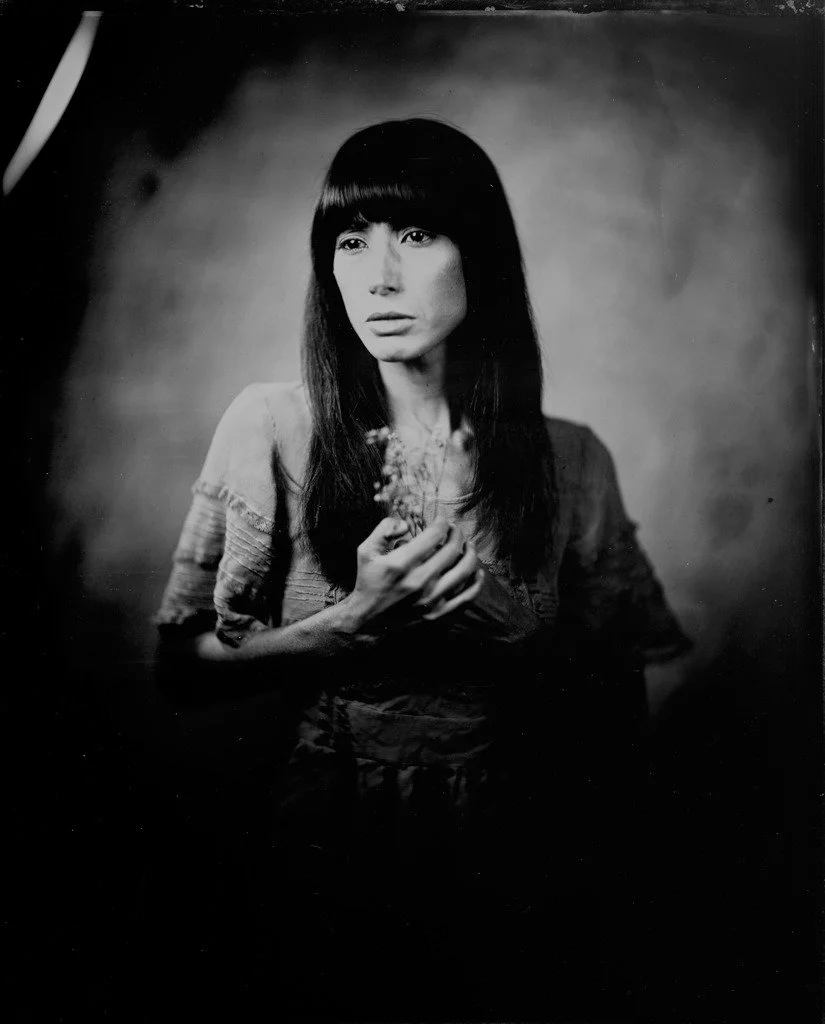
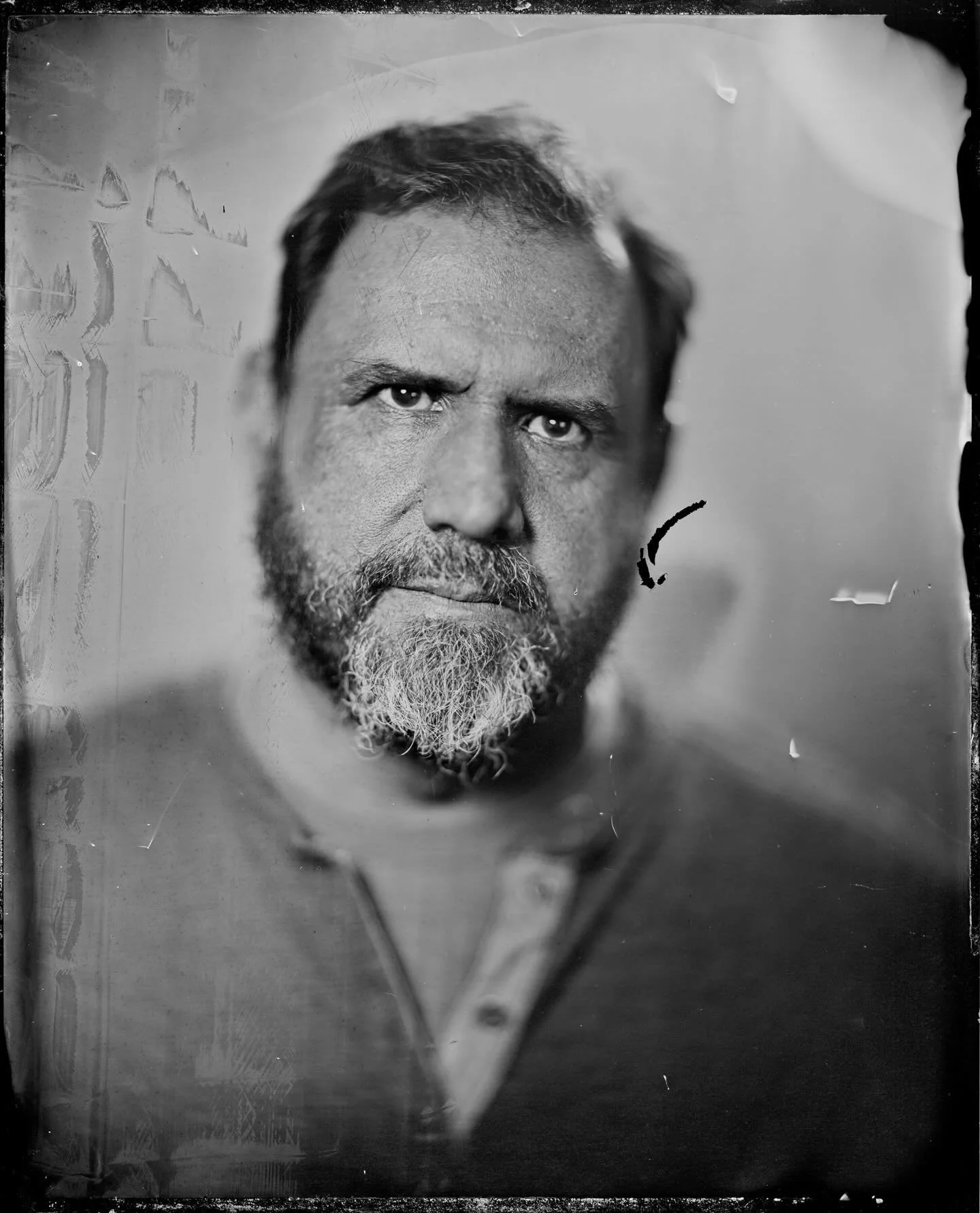
A wet plate tintype is a one-of-a-kind portrait made by hand in my Toronto studio using the same collodion process invented in 1851. It is not digital, not a print, and not reproducibleevery plate is a unique silver image, hand-poured, exposed in front of you, and developed minutes later. Sessions start at $300 per 8x10 plate, with a $100 deposit applied to your first plate. I am one of the few photographers in Toronto offering wet plate collodion commercially.
Book a Toronto wet plate session or contact me for private and gift commissions.
What is wet plate collodion photography?
Wet plate collodion is a photographic process invented in 1851 in which a sheet of metal (tintype) or glass (ambrotype) is hand-coated with collodion, sensitized in a silver nitrate bath, exposed in a large-format camera while still wet, and developed within fifteen minutes, before the chemistry dries. The result is a unique silver image with the depth, tonality, and physical presence that gave Victorian-era photography its distinctive look. Unlike a digital file or a film print, a wet plate is a one-of-a-kind object: there is no negative, no copy, no edit history. The plate you walk out with is the only one that will ever exist.
The process: 19th-century chemistry, modern Toronto studio
Each wet plate session in my Toronto studio follows the same four-step process used in 1855:
1. Coating. A sheet of blackened aluminum (tintype) or glass (ambrotype) is hand-poured with liquid collodion, the photographic emulsion. This is done in front of you and takes about ninety seconds per plate.
2. Sensitization. The coated plate is immersed in a silver nitrate bath for three to four minutes. This is what makes the plate light-sensitive, and why the process is called wet: the plate must be exposed before it dries.
3. Exposure. You sit for the camera. Because tintype has an effective ISO of about 1, exposures are long, typically two to ten seconds depending on lighting. Studio strobes are used to allow shorter exposures while preserving the soft, otherworldly look the process is famous for.
4. Development. The plate is developed, fixed, washed, and dried in front of you. The image emerges from black to silver in about thirty seconds. Total process time per plate: roughly twenty minutes
You are present for every step. Most clients say the process itself, watching a portrait of yourself emerge from chemistry on a sheet of metal, is the most memorable part of the session.
Why a tintype is different from any other portrait
| Digital portrait | Film print | Wet plate tintype | |
|---|---|---|---|
| Reproducible | Infinite copies | Many copies from negative | One unique plate, no copy |
| Material | Pixels on screen or print | Paper print from negative | Hand-coated metal or glass |
| Lifespan | Bit rot, format migration | 50–100 years | 150+ years |
| Process visible to client | No | Partial | Entirely, in front of you |
| Each frame's cost | Negligible | Low | Material + handcraft per plate |
| What you take home | Files | Prints | The original photograph |
A tintype is the only photographic medium where you walk out with the literal photograph that was taken, not a copy of it.
Frequently asked questions
Where is the wet plate studio located? The studio is in Toronto, easily accessible from across the GTA. Exact address is sent with your booking confirmation. Wet plate sessions are studio-only, the process requires fume ventilation and a dedicated darkroom.
How long does a wet plate session take? Plan for ninety minutes for a single-plate session, or two to three hours for multi-plate sessions. Each plate takes about twenty minutes start to finish.
How is wet plate different from black-and-white film? Black-and-white film is reproducible, one negative makes many prints. A wet plate tintype is the original photograph itself: there is no negative. Each plate is unique. The visual look is also different: collodion is sensitive only to blue and ultraviolet light, which is why skin appears porcelain-like and freckles, scars, and blemishes show up dramatically.
Can you make prints from a tintype? Yes, tintypes can be photographed and digitally scanned for high-resolution prints, but the original plate itself remains the artifact. I provide a digital scan of every plate at no extra cost.
How long does a tintype last? Properly stored, a tintype lasts 150+ years. The original wet plates from the 1850s are still legible today. I deliver each plate in an archival sleeve with care instructions.
Do you do tintype weddings or events? On request — but the process is slow (one plate every twenty minutes), so it works best as a featured guest experience rather than a primary event coverage. Contact me to discuss.
Can wet plates be used for headshots? Technically yes, but most professionals choose digital headshots for casting, LinkedIn, and corporate use because they need digital files immediately. Wet plate is for clients who want a one-of-a-kind art portrait, not a working headshot.
What should I wear for a wet plate session? Solid colors, ideally darker tones. Avoid blue or white tops, collodion's blue sensitivity makes them appear washed out. Black, deep red, brown, dark green, and patterned tweeds photograph beautifully.
Book a Toronto wet plate session
Wet plate is a slow, deliberate process, and that's the point. Each session is a chance to step out of the digital workflow entirely and leave with a tangible silver portrait that will outlive the file formats of today.
Reserve your wet plate session
Contact me for private commissions
If you're interested in another rare large-format process, I also offer 8x10 large-format film portraits. Toronto's only commercial 8x10 film studio.
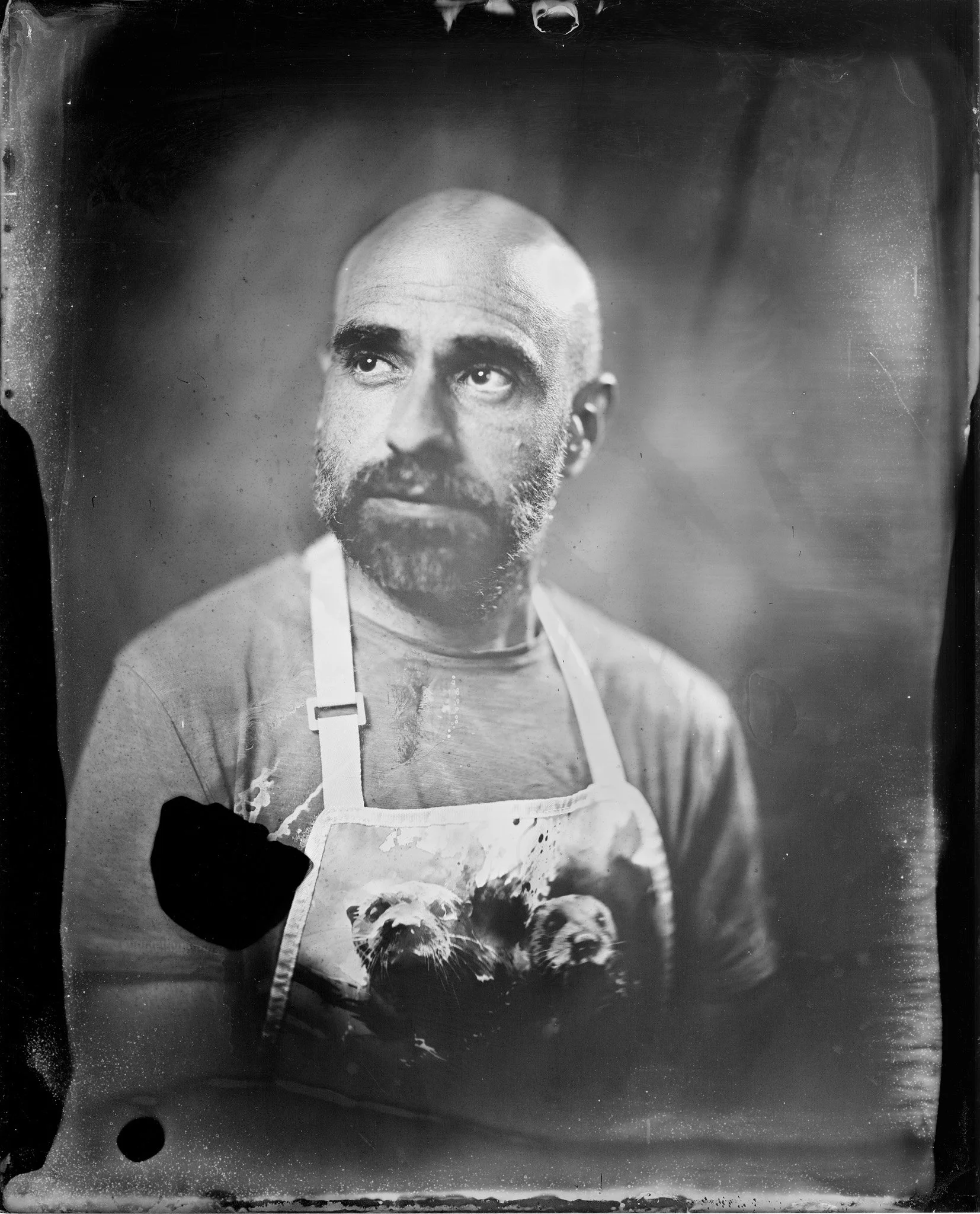
Timeless Portraits in Silver: The Art of Wet Plate Collodion Photography.
Wet plate collodion photography is more than just a photographic technique—it's a journey back in time. Invented in the 1850s, this meticulous and hands-on process produces stunning images on glass or metal plates, capturing a level of depth, detail, and character that digital photography simply can’t replicate.
At its core, wet plate photography is a slow and deliberate art. Each image is handcrafted from start to finish using vintage equipment, chemistry, and a true understanding of light. The result? One-of-a-kind portraits with rich tones, ethereal textures, and a timeless presence.

A 19th Century Process, Reimagined for Today
Every wet plate begins with the careful coating of a glass or metal plate in collodion, then sensitized in a silver nitrate bath. The plate must be exposed and developed while still wet—hence the name. It requires skill, patience, and complete attention to detail. No two plates are alike, and imperfections are celebrated as part of the medium's unique charm.
From the moment of capture to the final varnished piece, the entire experience is immersive and unforgettable—for both photographer and subject.
Book Your Session!
Embrace the beauty of imperfection and the magic of antiquity. Step into the studio, sit for a portrait, and walk away with a physical piece of history. I provide this service as something extra and require an specific time slot and booking. It can’t be done on location so you will need to come to my studio for it.
I’m one of the few photographers with enough knowledge, experience and equipment in Toronto to take this kind of pictures, if you always wanted to get one for you, for a friend as a cool unique gift, for your partner or a family member, don’t hesitate, drop me an email to discuss it.
Cost
I provide 8x10 inches tintypes, they take around 15-20 minutes each and can be delivered via mail with an extra cost or picked up the day after the session. I’ll varnish them with the same materials photographers have been using for more than 150 years. Each plate has a cost of $300 and require a deposit of $20 for the chemistry and cleaning process. I require a deposit of $100 that counts towards your first tintype.
If you are interested on this unique process, please drop me a message.