
What Is a Tintype? Wet Plate Collodion, Explained
A tintype is a photograph made by hand on a sheet of metal, using a process from the 1850s called wet plate collodion. There's no file, no negative, and no second copy, you walk away with the actual plate the light hit, a one-of-a-kind object that will outlive every JPEG you own. Here's how it works, and how it differs from the other things people often confuse it with.
What is a tintype?
A tintype (historically called a ferrotype or melainotype) is a direct-positive photograph made on a thin sheet of blackened metal. The name is a bit of a misnomer, there's no tin involved; the plate is iron, coated dark so the image reads as a positive.
Because it's a direct positive, there's no negative to print from. Each tintype is unique: the plate that sat in the camera is the finished piece. That's the whole appeal, it's a physical, hand-made object, not a file you reproduce.
How wet plate collodion works
Wet plate collodion was introduced in 1851 by Frederick Scott Archer, and the modern process is identical to the original. In a single sitting I:
Pour a syrupy solution called collodion evenly across the plate by hand.
Sensitize it in a bath of silver nitrate, which makes the surface light-sensitive.
Expose it in the camera, while it's still wet.
Develop it on the spot, then fix and varnish it.
The catch that gives the process its name: all of this has to happen in about 10–15 minutes, before the plate dries. Once the collodion dries, it stops being sensitive to light. That's why wet plate is done in a studio with the darkroom a few steps away, and why every plate is made start-to-finish in front of you.
Tintype vs. ambrotype vs. wet plate — what's the difference?
People use these terms interchangeably, but they're not the same thing:
Wet plate collodion is the process, the chemistry and technique described above.
A tintype is a wet-plate image made on metal.
An ambrotype is the same process on glass.
So a tintype is wet plate, "tintype vs. wet plate" isn't really a competition; one is a type of the other. The choice between a tintype (metal) and an ambrotype (glass) comes down to the look and how you want to display it.
Wet plate vs. dry plate vs. film
Dry plates came along around 1871 and largely replaced wet plate commercially, because they could be coated in advance, stored, and developed later, far more convenient. Film followed and made photography portable.
Convenience is exactly what wet plate gives up, and exactly why people still seek it out. Nothing about it is automated: the tonality, the hand-poured edges, the tiny imperfections, and the one-of-a-kind result are things film and digital simply can't reproduce.
Why a tintype looks the way it does
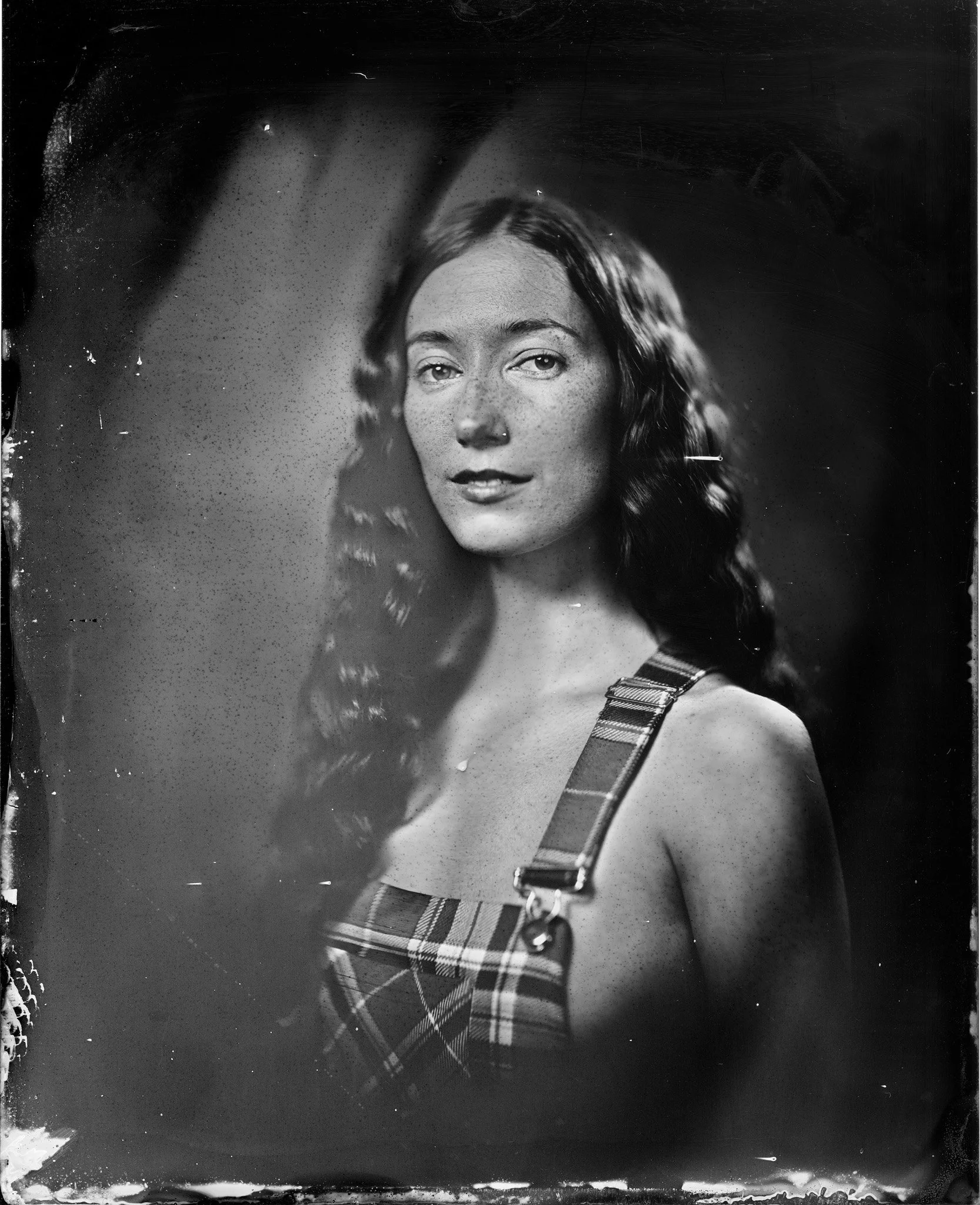
Collodion is sensitive mainly to blue and ultraviolet light, which is why tintypes have such a distinctive look: skin renders with depth and texture, pale eyes go luminous, and the whole image has a silvery, timeless quality. The effective film speed is extremely low, so exposures are long and you hold still for a moment, part of why sitting for a tintype feels closer to a portrait session from 150 years ago than a modern photoshoot.
How long does a tintype last?
Properly varnished, a tintype is archival, it can last well over 150 years. Plenty of tintypes from the 1860s still exist today. Care for it like the heirloom it is (out of direct sun, handled by the edges) and it will outlast anything you've stored on a hard drive.
Where to get a tintype in Toronto
I make wet plate collodion tintypes by hand in my Toronto studio, serving clients across the GTA, and as far as I know I'm the only photographer offering 8×10 large-format tintype portraits commercially in the city. If you've been searching for a tintype near you in Toronto, this is where to sit for one.
See sittings, sizes, and pricing on the wet plate & tintype portraits page, or book a session directly. You'll leave with a unique silver portrait made the same way it was in 1851.