
Ok, the chat GPT entry was too cringe. I’m going to share the image and that’s all.
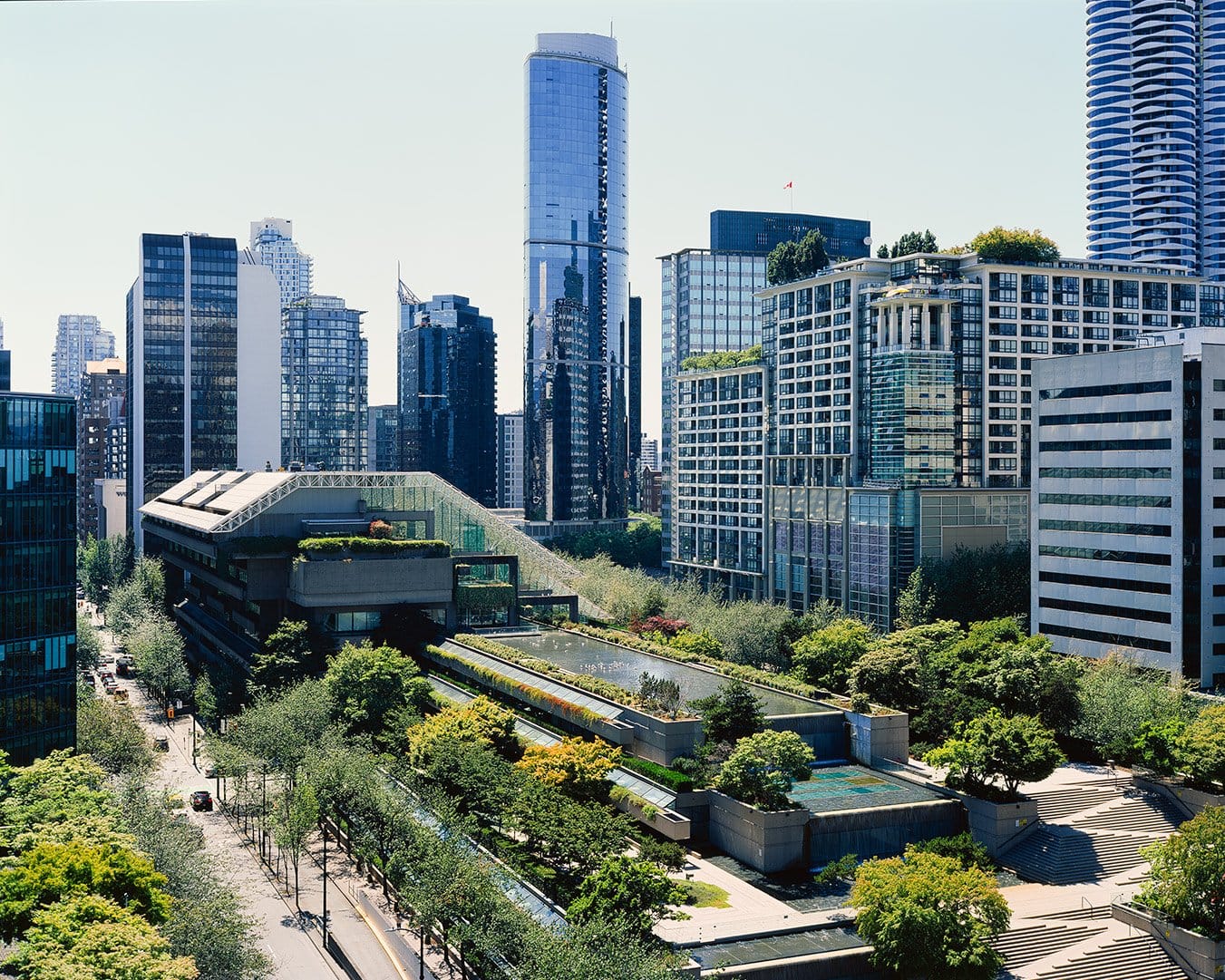
Just the image, then
I meant it when I said the first version of this entry was too cringe to keep. I had let a chatbot write something flowery about the building and it read like a brochure, so I deleted it. This is the honest replacement, which is mostly about why the building was worth an 8×10 sheet at all, not a tour of it.
Why architecture wants a view camera
Large format and buildings go together for one specific reason, movements. A view camera lets you shift and tilt the lens independently of the film, which means you can keep a tall structure’s vertical lines actually vertical instead of letting them lean back the way they do on a normal camera pointed upward. On a court building, all straight lines and repeating structure, that control is the whole game. Get the camera level, rise the front to take in the height, and the verticals stay parallel, the way they were designed. It is slow, fiddly work under the dark cloth, checking the ground glass corner by corner, but the payoff is a frame where the geometry is honest rather than distorted.
The light and the detail
Civic architecture is patient in a way that rewards a slow camera. The building is not going anywhere, the light moves across it over hours, and the detail in the stone and glass is exactly the kind of thing a big negative renders without breaking down. I tend to work these frames early or late, when the light rakes across the surface and gives the structure some depth instead of the flat wash you get at midday. A wide even facade can look like nothing at noon and turn into something worth printing an hour before sunset, so the waiting matters as much as the setup.
A permanent process for a permanent building
There is also something fitting about photographing a public building with a deliberate, permanent sort of process. A courthouse is meant to outlast the people who pass through it, and an 8×10 negative is about as durable as a photograph gets, a physical original that will still be readable long after the files on my drives have been through a dozen format migrations. So that is the entry. One frame, made carefully, of a building that deserved better than the words I first put under it, and this time I wrote them myself.
One last note on the irony of it. I deleted a machine written description of this building and replaced it with my own, which is a small version of the same choice the whole large format habit represents. There is always a faster, easier, more automated way to make the picture and to write about it, and there is a slower way where you do the work yourself and stand behind the result. I do not think the slow way is morally superior, it is just the one that produces things I am willing to put my name on, which is the only standard that has ever held up for me.