
Second Beach
Second Beach sits on the English Bay side of Stanley Park, past the crowds at the park entrance, where the seawall runs along the water toward Ferguson Point. It is the more domestic of the park’s beaches, with a heated outdoor pool set just back from the sand and grass leading down to the shore, and it faces west, which is the detail that matters most to a photographer. Everything here is pointed at the sunset.
Why a beach suits large format
A beach at the end of the day is a large format subject in the classic sense. The light is low and even, the range between the bright water and the shadowed land narrows as the sun drops, and there is a horizon to build a composition on. On 8×10 that flat, wide geometry has room to breathe, and the gradation in a clear evening sky, from the warm band at the waterline up into deep blue overhead, is exactly the kind of continuous tone a big sheet of film records better than anything smaller.
Working the light
The trade at sunset is that the good light lasts minutes, not hours, and a large format camera is slow. So the work happens before the light arrives. I set up while the sun is still well up, compose the frame, focus, and get the exposure worked out in advance, so that when the colour finally comes I am only metering the change and pulling sheets, not fumbling with the camera. Miss the setup and you spend the best ten minutes of the day under a dark cloth instead of making frames.
The water and the shutter
Water is the other variable. A short exposure freezes the small chop into a busy texture, and a longer one smooths it into something calmer, so the shutter speed is a creative choice as much as a technical one. As the light drops the exposures naturally get longer anyway, which tends to quiet the surface on its own, and that suits the mood of the place at that hour.
Why this beach, this camera
Second Beach is not a dramatic landscape, it is an ordinary city beach that happens to face the right way, and that is part of why I like it on 8×10. The camera takes a common, familiar view and slows it down until you notice the tone and the light instead of the postcard. A place everyone has stood becomes worth looking at again when it is rendered on a sheet this size, with this much care spent on a scene most people photograph in a second and forget.
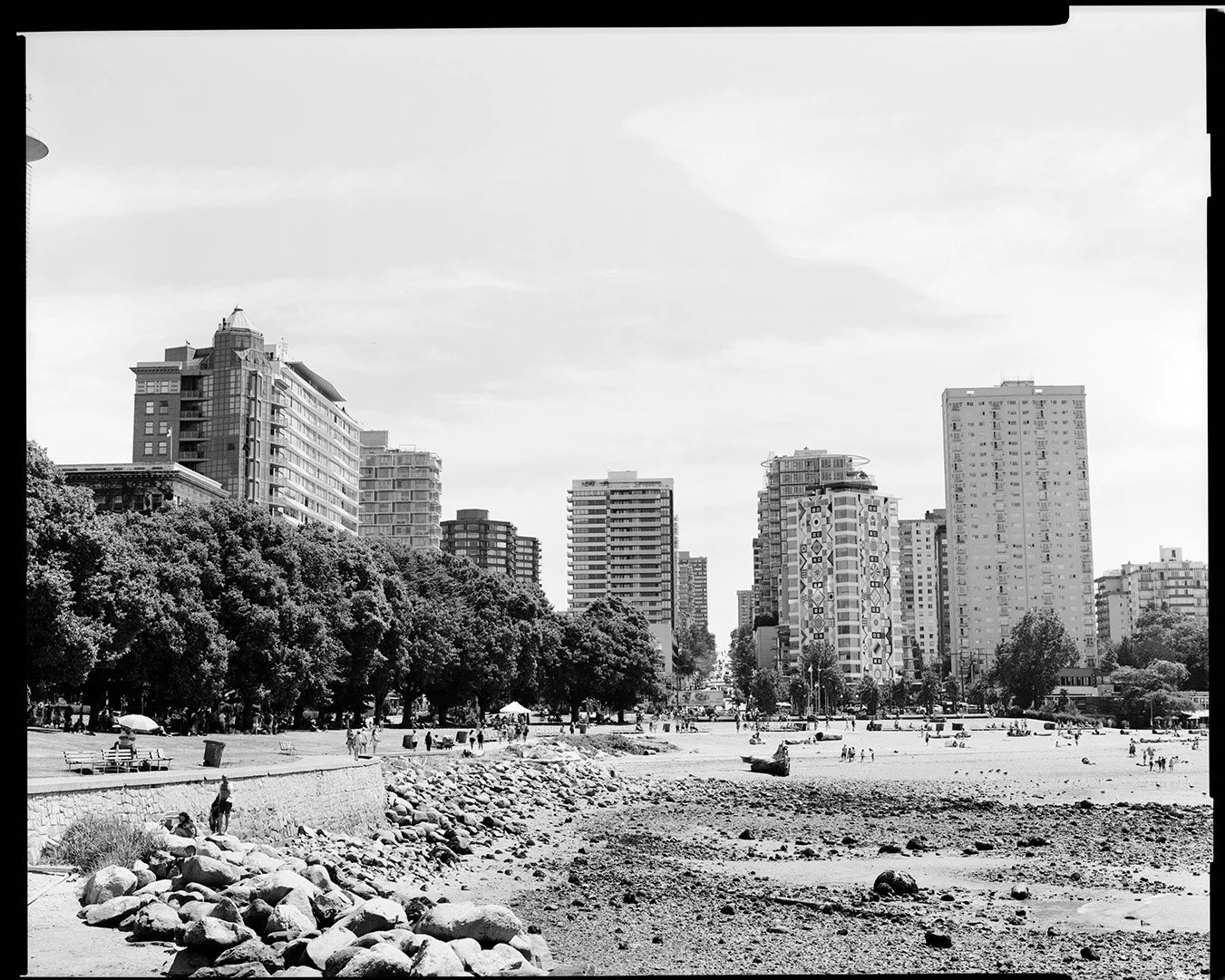
What keeps me coming back to Second Beach specifically, over the more famous viewpoints, is that it is a genuinely ordinary place. People swim there, kids build things in the sand, the pool fills up on a hot day. It is not a wilderness or a landmark, it is a neighbourhood beach that happens to face the sunset, and there is something honest about spending the full weight of an 8×10 setup on a scene that plain. The camera does not need a spectacular subject to justify itself. Often the quiet ones hold up better on film than the dramatic views everyone already has.