A Polaroid of Daria
This is an instant print of Daria, made on the same large format camera as the rest of these portraits but on instant film, so what you are looking at is the actual object that came out of the camera, not a scan of a negative. There is no original hiding behind it. This single physical print is the whole photograph, and once it exists there is no way to make a second one that is truly the same.
The imperfections are the character
Where the earlier instant frame I posted was about the economics and rarity of shooting instant film this size, this one is really about its flaws. Instant film at large sizes does not develop perfectly evenly. You get soft edges where the chemistry did not spread quite right, small shifts in colour across the frame, the occasional light leak or blemish that belongs only to that one sheet. On a clinical digital portrait those would be defects to remove. Here they are the point. They make the print feel handmade, like a physical thing that happened once, rather than a file rendered to spec.
Why it suits a portrait
Those imperfections do something specific to a face. They soften the read, add a little atmosphere the person did not have to perform, and pull the portrait away from the flat perfection everyone is used to seeing. Daria’s expression carries the frame, but the film’s slight unpredictability gives it a mood a clean capture would have missed. You cannot plan that mood, you can only choose a material that tends to produce it and stay open to what it gives back.
Committing to one frame
Instant sheets at this size are expensive and there is no recovering a bad one, so the focus and the exposure have to be right before you pull the sheet. I focus on the ground glass, set everything, load the instant back, and commit, knowing there is no negative to fall back on and no second attempt at this exact light and expression. That pressure is part of why instant portraits feel the way they do. Both of us knew, standing there, that we were making one object and one only.
The print itself
What Daria walked away with, and what this scan only approximates, is a one of a kind physical print with its own texture and its own small flaws, tied to one afternoon. In a world where a photograph almost always means an endlessly copyable file, an instant portrait goes the other way entirely, and that is exactly why I keep making them.
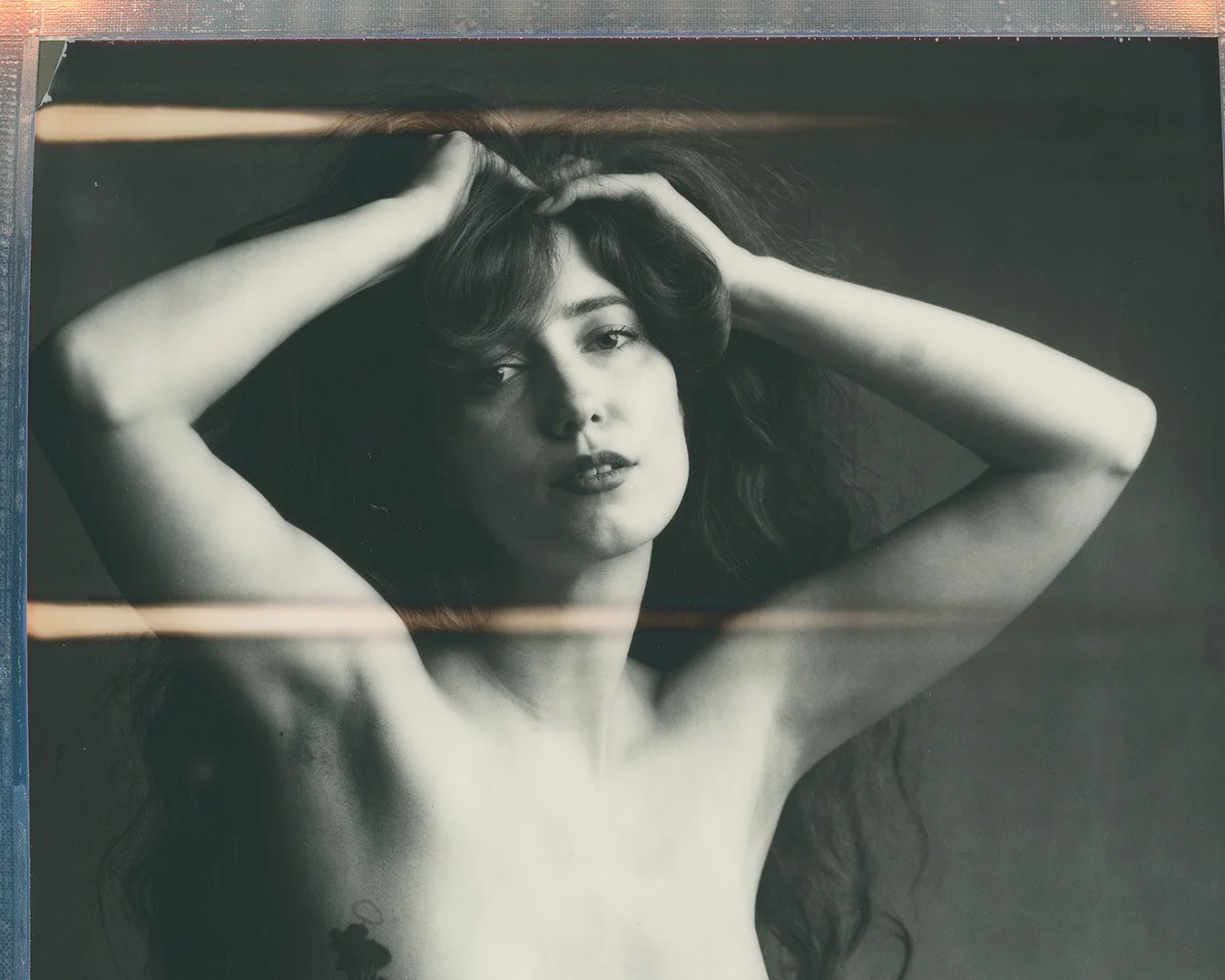
One honest caveat about seeing this online. A scan of an instant print can only approximate the object itself. The subtle unevenness, the exact way the chemistry settled, the faint texture of the physical surface, all of that flattens out on a screen. What you are looking at here is a photograph of a photograph, a reasonable stand in for a thing that really only works in the hand. That gap is not a flaw in the scan, it is the nature of instant film, and it is part of why the format still feels worth the cost and the trouble to me.