
The following image is an 8×10 polaroid of Marie.
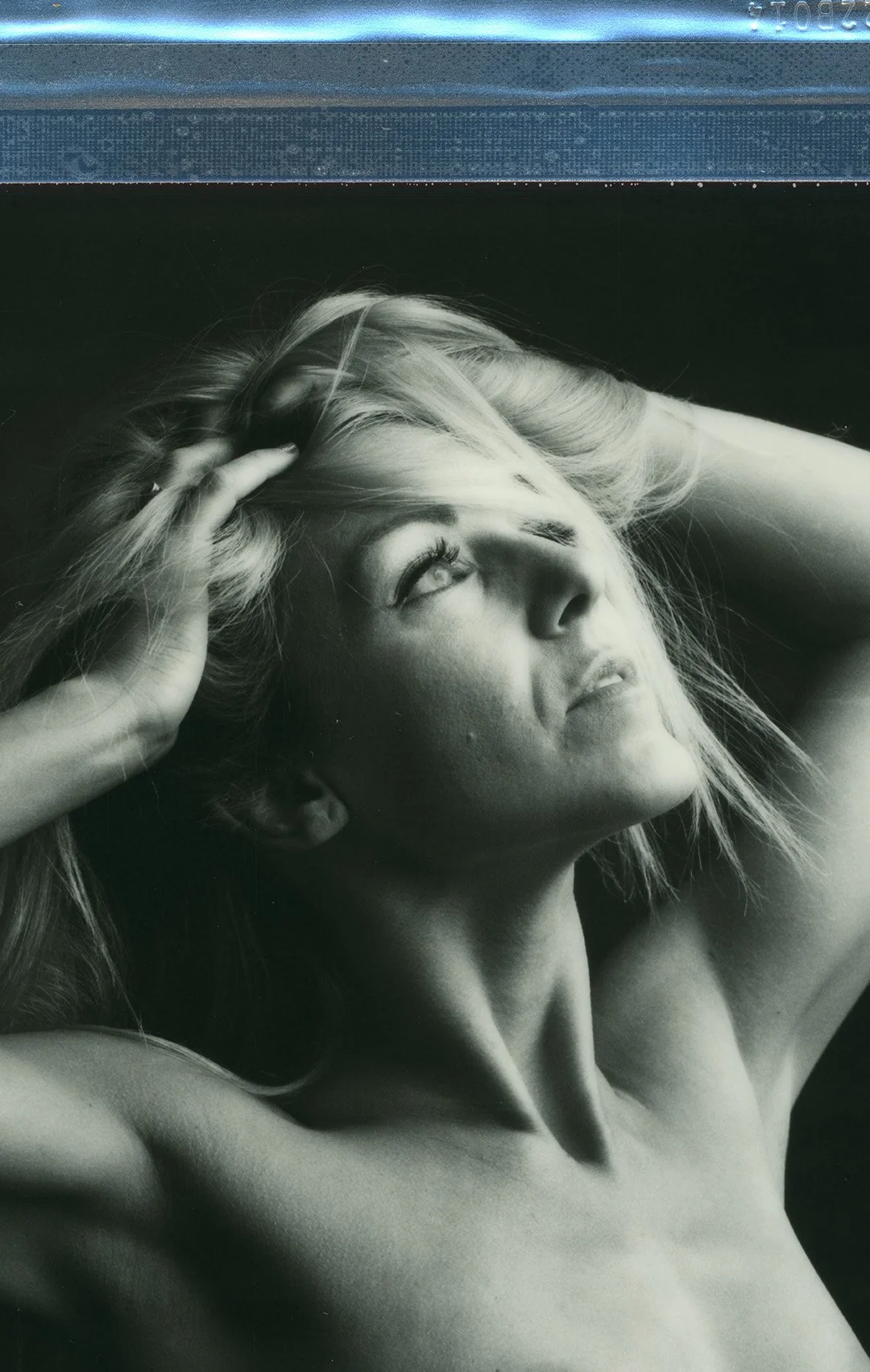
An 8×10 Polaroid
This is an 8×10 instant, not a scan of a negative but the actual sheet that came out of the camera. Instant film at this size is its own thing. You expose it like any sheet, then it develops in front of you in minutes, and what you hold at the end is a one of a kind object with no negative behind it. There is no second print, no edition, just the single physical piece. That rarity changes how you treat the frame. You are not banking a file to work on later, you are committing to one object that either works or does not.
Why shoot instant on a camera this size
Most people meet instant film as a small novelty print. At 8×10 it stops being a novelty. The image has real scale and real detail, and the slightly unpredictable way the chemistry spreads across a big sheet gives every frame small imperfections that belong only to that one. For a portrait that unpredictability is a feature. The person cannot be reduced to a repeatable file, they get one specific object tied to one specific afternoon.
The discipline of it
Instant sheets are expensive and there is no recovering a bad one, so the meter reading and the focus have to be right before you pull the sheet. I focus on the ground glass, set the exposure, load the instant back, and only then commit. If the light shifts between focusing and shooting, that is on me. The payoff is immediacy. Both the sitter and I see the result while we are still standing there, which is a rare thing in film, where the answer usually comes days later after developing. Marie sat for this one, and the print is exactly as it came out of the camera.
Why this is rare
Instant film at 8×10 is one of the most expensive ways there is to make a single photograph. The material costs more per sheet than most people spend on a whole roll of 35mm, there is no negative to reprint from, and the format that makes it is niche enough that supply comes and goes with whoever is manufacturing it. That is part of why an 8×10 instant portrait feels different to hold. It is not a file that can be copied forever, it is a physical object that exists once, made at real cost, in a few minutes, in front of the person it shows. In a world where a photograph usually means an endlessly copyable file, an object like this goes the other way entirely. The person in it walks away with something closer to a made thing than a captured one, and I walk away with nothing but the memory of it, because there is no negative left in my hands.
The other thing worth saying about 8×10 instant is how physical the process is. The sheet develops in a set of chemical layers sandwiched inside it, and once it is done you are holding the finished picture with no darkroom step in between, no negative to file, nothing to reprint from. It collapses the whole normal chain of shoot, develop, scan, print into a single object that exists a few minutes after the shutter. For a portrait that immediacy matters, the sitter sees themselves while the moment is still warm, which almost never happens with film.