
Simple entry, just a picture of Daria
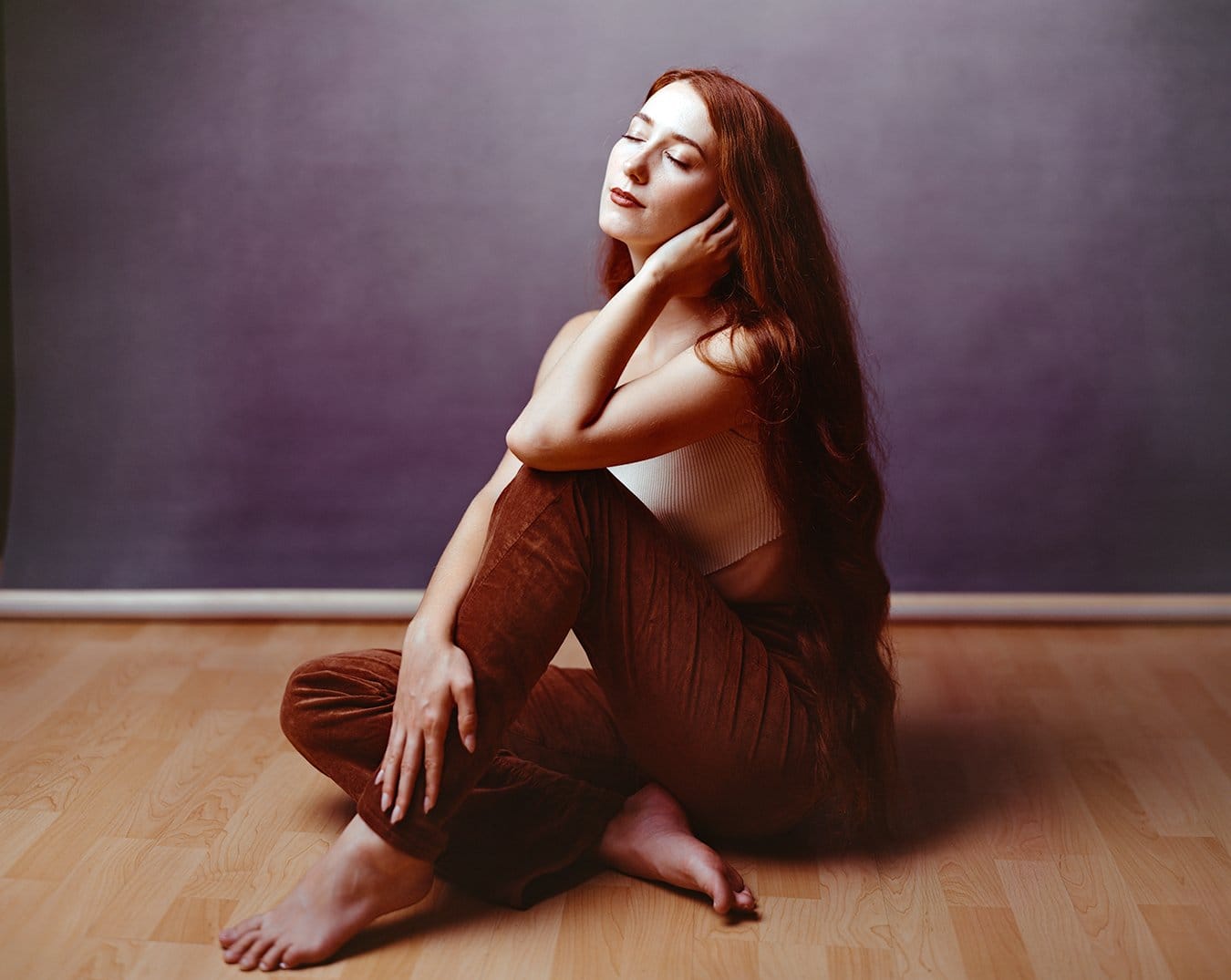
A portrait on 8×10
Shooting a portrait on an 8×10 camera is a strange thing to put a person through. The camera is huge, it sits on a heavy tripod, and every frame is a single sheet of film loaded in the dark. There is no burst, no chimping, no thirty near identical frames to sort through later. You get one, maybe two, and both of you know it. That changes how a sitting feels. The subject holds still and holds their expression while I focus under a dark cloth on an image that is upside down and reversed on a piece of ground glass, and that shared patience tends to show up in the face. People settle. The nervous energy a fast camera feeds on has nowhere to go, so it drains out, and what is left is closer to how someone looks when they are not performing for a lens.
What the format gives you
The reason to do any of this is the negative. A face recorded on eighty square inches of film has a smoothness in the tones and a fall off in focus that a small sensor imitates but never quite matches. At portrait distance the depth of field on 8×10 is paper thin, so the plane of focus might be only the near eye, with the far eye and the shoulders already going soft. That is not an effect added later, it is optics, and it pulls the viewer straight to the part of the face that carries the picture. Nothing about it is efficient, and that is the appeal.
Deciding on one frame
A digital session can produce hundreds of frames in an hour. A large format sitting produces a handful, and each one costs real money in film and chemistry, so you do not waste them. That economy forces attention on both sides of the camera. I am not hoping to get lucky across a burst, I am deciding, with the person in front of me, on this frame, now. When it comes back right it does not feel like a capture, it feels like something the two of us made on purpose. Daria sat for several of these, and this is one I kept.
Working in the studio
In the studio the large format portrait slows down even further. The camera does not move once it is placed, so the light comes to the camera and the sitter, not the other way around. I set a key light, check how it falls across the face on the ground glass, and adjust in small steps, because at this size and this shallow focus a small change in the light or the head position is obvious on the film. Daria has sat for several of these frames, and shooting the same person more than once helps. The nerves are gone by the second or third sheet, the poses get simpler, and the portraits get quieter and better. A face you have photographed before on a camera this deliberate stops being a subject and starts being someone who knows the rhythm of the thing, which is exactly when the good frames start to happen.