
What you are looking at
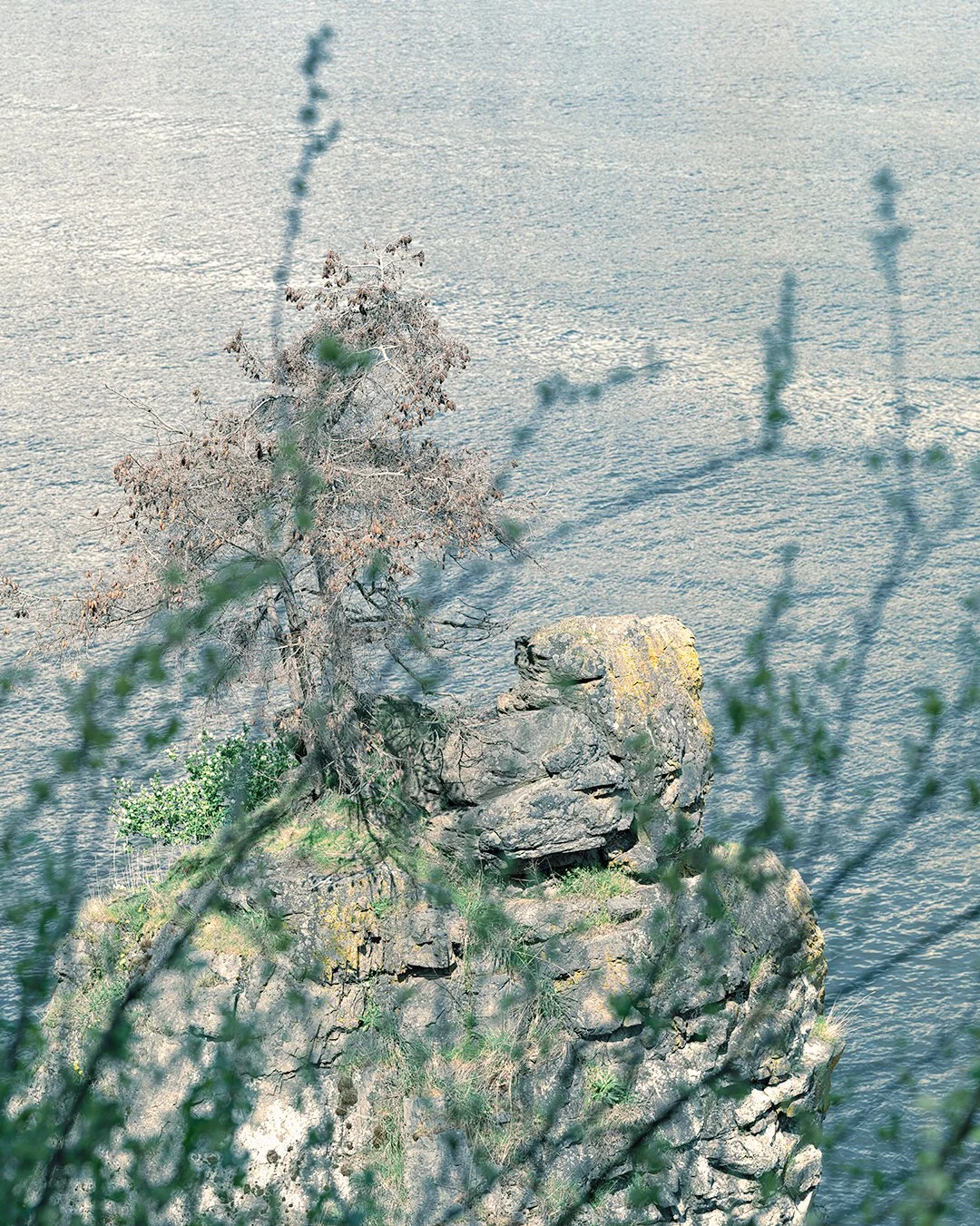
Siwash Rock is a basalt sea stack sitting just off the Stanley Park seawall on the west side of the park, a short walk past Third Beach. It is a column of harder volcanic rock that stayed standing while the softer stone around it eroded into the inlet, and the small stand of trees on top is what makes the outline so easy to pick out from the water. In the Squamish tradition the rock has its own name and its own story, of a man turned to stone by the transformers as a mark of respect for how he carried himself. It is one of the few things in the city that looks the same now as it does in every hundred year old photograph of it.
Why a second frame
The first Siwash frame was made on flat light, so I came back for a harder sky and a tighter read on the rock face. That is the whole game with a fixed subject. You cannot move the rock, you can only wait for the light and the water to hand you something the last frame did not.
The 8×10 part
A sea stack is a patient subject and that suits a large format camera. Every sheet of 8×10 is loaded on its own, so you set the tripod on the seawall, focus under the dark cloth with the image upside down on the ground glass, and meter the sky and the rock separately to decide which one you are protecting. Film only holds so many stops before the highlights or the shadows go, so that choice is the exposure. Then you wait for the wind to drop and the water to settle, because at a small aperture the shutter is slow. Locked to the tripod, the composition comes down to the lens and to patience, not to walking around. The reason to carry a camera this heavy down to the rocks is the negative. A big sheet of film holds the texture in the wet basalt and the gradation in the sky at the same time, without the hard edges a small digital file fights with.
If you go to shoot it
The rock sits on the west side of the seawall between Third Beach and Ferguson Point, and from there you are working into the afternoon and evening light. A lower tide gives you more foreground rock, and late light separates the stack from the water instead of flattening everything into one grey. There is foot and bike traffic on the seawall all day, so a tripod has to sit off the path. Both Siwash frames are in the 2023 print gallery.
One more thing about this spot. From the seawall you are shooting the rock against the water and the open western sky, so late in the day the stack goes toward silhouette and the meter wants to lift it. I read for the rock face and let the sky fall where it falls, because a bright western sky on this coast holds detail longer than you expect. It is a different problem from the first frame, which is exactly why I wanted a second one.